
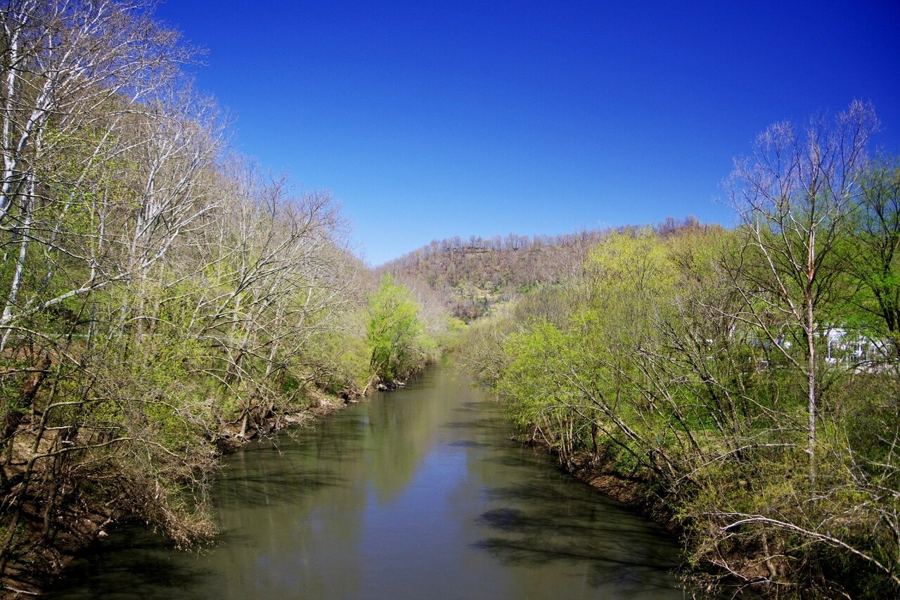
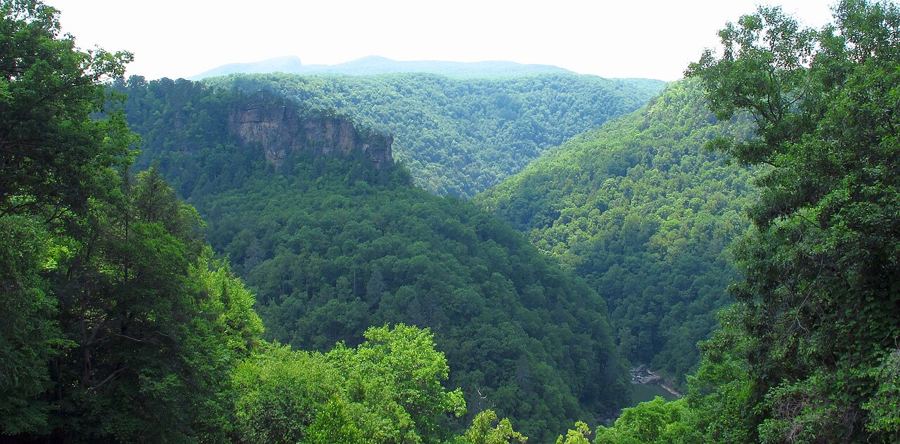
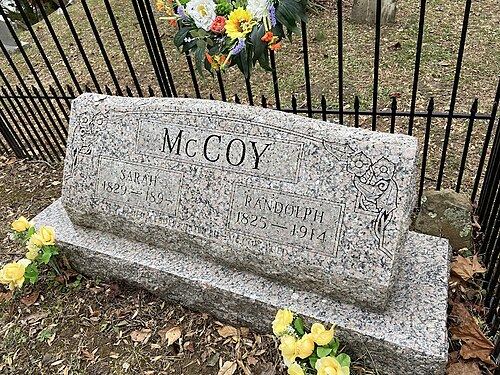
The Tug Fork is the border: West Virginia on one bank, Kentucky on the other. Between 1878 and 1891 two families on opposite sides of it fought a feud that the whole country read about. These pages follow it on the ground, stop by stop, and then follow the valley into the coal years that came after.
- 1865A Union veteran killed
- 1878The hog trial
- 1880Johnse and Roseanna
- 1882Election day
- 1888New Year's night
- 1888Grapevine Creek
- 1890A hanging in Pikeville
- 1891The truce
West Virginia bank
- Devil Anse Hatfield
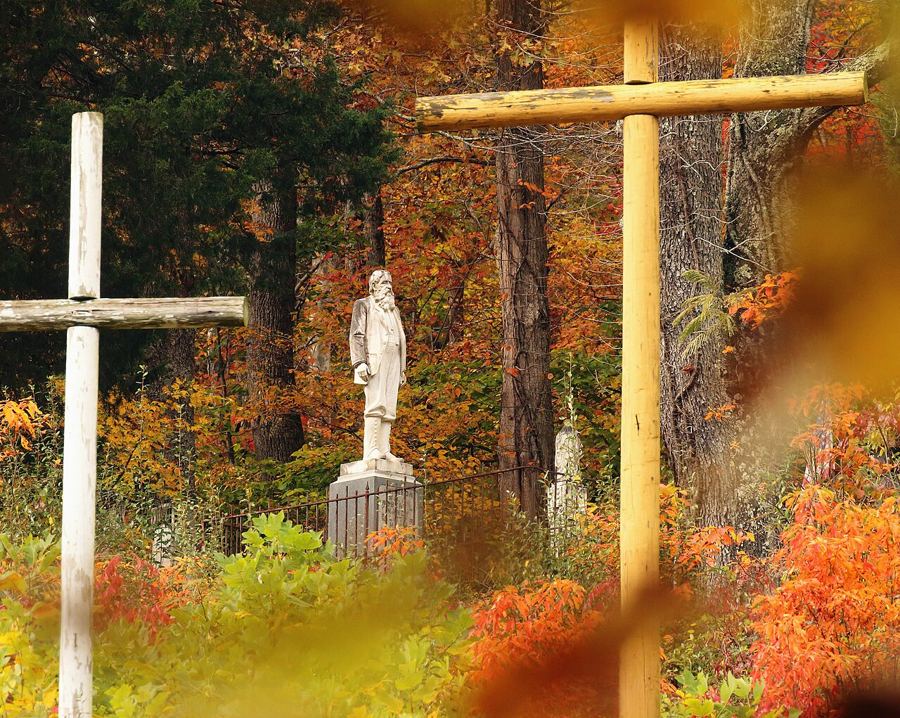
- The Hatfield Cemetery and Devil Anse's statue
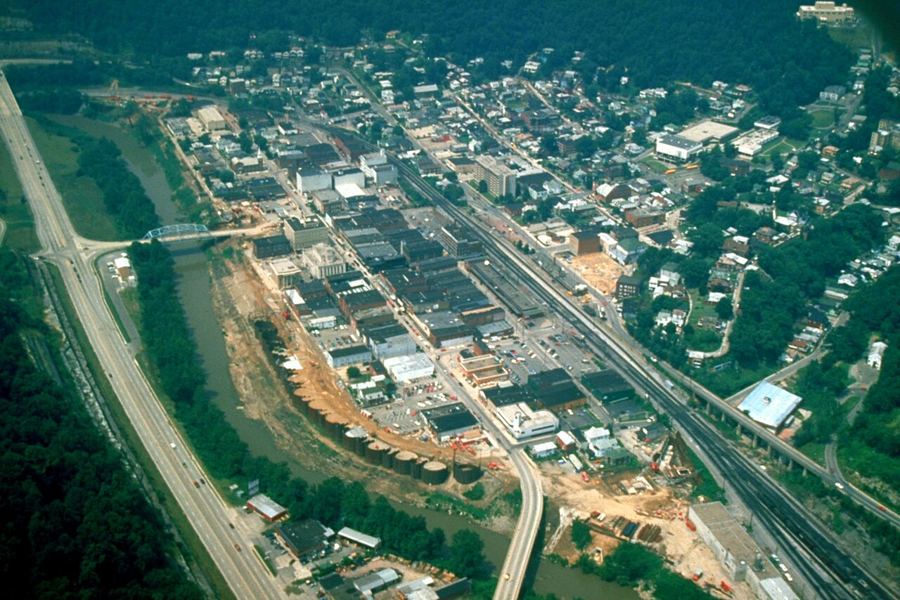
- Williamson: a coal town built on the river's edge
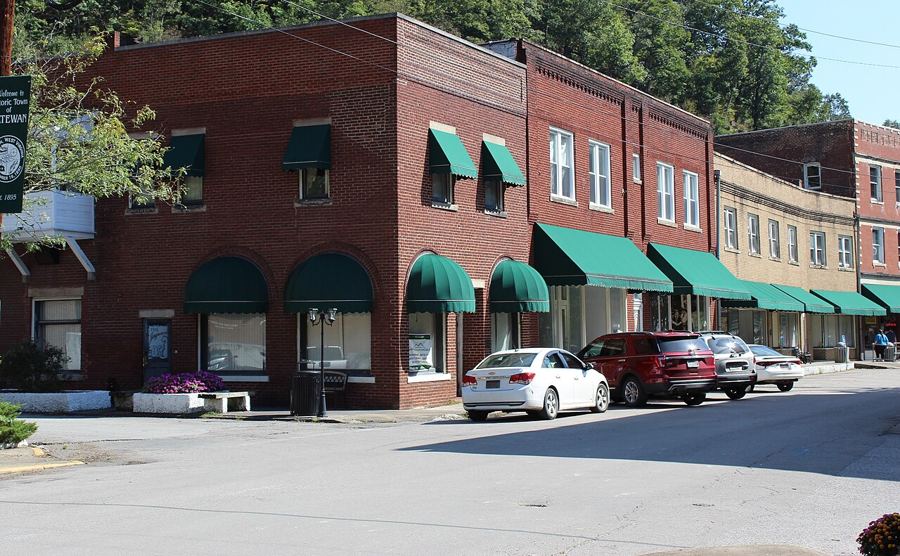
- Matewan: one small town, two hard histories
- After the feud: the mine wars of southern West Virginia
- Coal and the Norfolk and Western: how the rails remade the valley
- ATV trails and the hollows: riding feud country with care
Six blocks of the quilt
Before you drive
Feud country is two-lane roads, coal trucks, patchy phone signal and family land. Plan two days, carry water and a paper map, and read the suggested route first.
Credits: Hillboy23 | cc by-sa 4.0 (source file); FloNight | cc by-sa 4.0 (source file); Nyttend | public domain source file; Brian Stansberry | cc by 4.0 (source file); Magnolia677 | cc by 4.0 (source file); U.S. Army Corps of Engineers, photographer not specified or unknown | public domain source file; FatCat96 | CC0 1.0 (source file); Adam Jones | cc by 2.0 (source file)


