
Election days in the Tug Valley in the nineteenth century were social occasions as much as civic ones. Men came in from the hollows to vote, trade, talk and, very often, drink. On 7 August 1882 such a gathering took place at a polling place on Blackberry Creek in Pike County, Kentucky. Before the day was over, Ellison Hatfield, a brother of Devil Anse, lay badly wounded, and three of Randolph McCoy's sons were under arrest. Within a few days four men were dead.
The polling place on Blackberry Creek
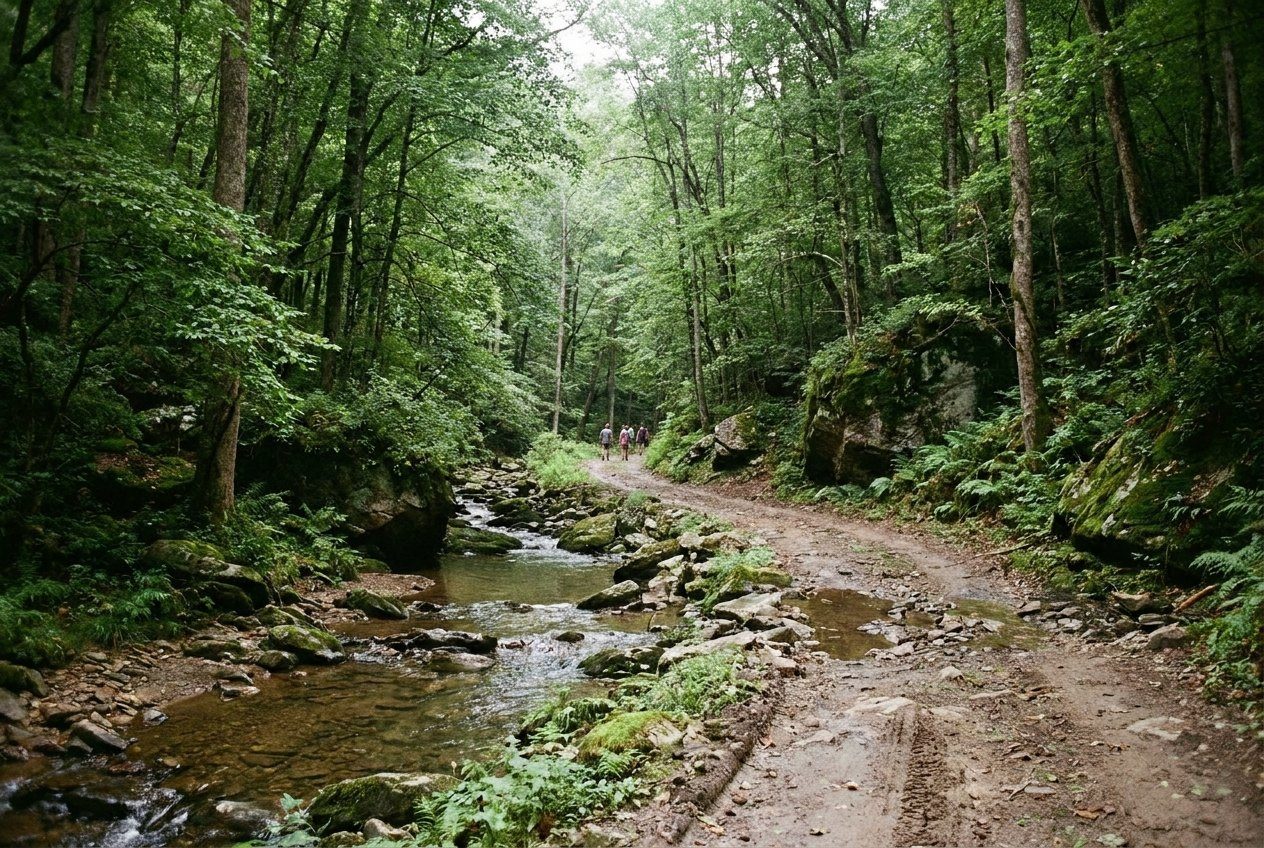
Blackberry Creek runs into the Tug Fork on the Kentucky side, and the McCoy home was in this area. Members of both families, and many of their neighbours, were at the polling place that day. Accounts say there was drinking, and that old grievances were in the air: the hog trial of 1878, the death of Bill Staton in 1880, and the unhappy affair of Johnse Hatfield and Roseanna McCoy.
Ellison Hatfield was a Confederate veteran, a big man and, by most accounts, well liked. He had no direct part in the earlier disputes. That makes what followed all the harder to read.
Voting then was a public act, often done by voice, and the polling place was usually a house, a schoolhouse or a store where people stood about for hours. Liquor was easy to come by, and quarrels were common at such gatherings across the mountains, most of them ending in nothing worse than bruises.
The fight
The exact sequence is disputed. Most versions say an argument began between Tolbert McCoy and a Hatfield over a small debt, and that Ellison Hatfield stepped in. A fight followed. Tolbert drew a knife and stabbed Ellison many times. His brother Pharmer McCoy shot Ellison, and the youngest brother present, Randolph Jr., called Bud, is said to have joined in. Ellison fell, gravely wounded.
Kentucky officers arrested the three McCoy brothers on the spot and set off with them toward Pikeville, the county seat, where they would be held for trial. The wounded Ellison was carried across the river to West Virginia.
Taken across the Tug
Word reached Devil Anse quickly. He gathered a party of Hatfields and allies, overtook the officers and took the three brothers from them. The prisoners were carried across the Tug and held in an empty schoolhouse on the West Virginia side while the family waited to see whether Ellison would live. The story goes that Devil Anse made it clear that if his brother lived, the McCoys might be spared, and if he died, they would not.
Randolph McCoy's wife, Sarah, is said to have gone to the schoolhouse to plead for her sons. Accounts of what was said there differ widely, and many of the quoted lines in later books cannot be traced to anyone who was present.
Another stop · Pike CountyThe 1878 hog trialEllison Hatfield died of his wounds a day or two after the fight. He was in his early forties, and he left a wife and children on the West Virginia side. His death turned a brawl into a matter of family honour for the Hatfields, and the men holding the McCoy brothers knew what it would mean for their prisoners.
The pawpaw trees
After Ellison's death, the Hatfield party brought the three McCoy brothers back across the river to the Kentucky side. There, near the bank, the brothers were tied to pawpaw bushes and shot. Tolbert, Pharmer and Bud McCoy died where they stood. Bud was about fifteen years old.
The killings were done on Kentucky soil, which mattered later: it meant the case belonged to Kentucky courts. Exactly who fired is one of the points on which accounts differ, and several men were later charged. Devil Anse was among those indicted, though whether he fired himself is not settled.
The three brothers were buried in a family plot near the McCoy home. For Randolph and Sarah McCoy, it was the first of several losses of children that the feud would bring; the rest of Randolph's story is in Randolph McCoy.
The indictments
A Pike County grand jury indicted around twenty men for the killings, Devil Anse and several of his sons and relatives among them. The warrants could not be served easily, because the accused lived in West Virginia, and the state did not hand them over. For several years the indictments sat in the Pike County records while the accused went about their lives across the river.
That might have been the end of it. Instead, in 1887 the old charges were revived, rewards were posted and bounty hunters began to cross the river. The Hatfields' response, on the first night of 1888, was the most notorious act of the whole feud, told in New Year's night, 1888.
Reading the story now
It is easy, more than a century later, to turn the events of August 1882 into a set piece with clear heroes and villains. The record does not support that. Ellison Hatfield was killed in a brawl that began over something trivial. The three McCoy brothers were killed without trial, one of them barely more than a child. Both families lost people they loved, and the bitterness that followed was real on both sides.
If you visit the Blackberry Creek area today, you will find a quiet residential valley, not a battlefield. The McCoy homeplace site is marked, and the surrounding land is mostly private. Keep to public roads, do not walk onto farms or into yards, and if you stop at a marker, park well off the road. The broader sequence of events is in the feud in brief.